

Growing a business in the UAE takes more than strong sales; it depends on how efficiently you collect what you are owed. Many companies in Dubai generate steady revenue yet still struggle with cash flow because their receivables move too slowly. This is where effective accounts receivable (AR) management matters. Without a well-organized strategy, businesses risk a rising number of overdue invoices, liquidity pressure, and weakening financial stability.
Because payment cycles in the UAE often run longer than agreed terms, managing receivables proactively is essential. When a business has clear procedures, consistent performance tracking, and close alignment between receivables and financial planning, it is far better placed to sustain stability and growth. The accounting and bookkeeping services offered by ebs help streamline this process and keep it accurate and compliant through professional support.
Setting Payment Terms in Line with UAE Practice
Clear payment terms are the foundation of a healthy receivables process. Credit periods in Dubai commonly fall between 30 and 60 days, though this varies by industry. Companies that fail to agree terms upfront often face disputes or delayed payments later.
Agreements should clearly state invoice due dates, accepted payment methods, and any penalties for late payment. Aligning these terms with UAE business norms creates consistency and reduces ambiguity in client relationships. Setting expectations early encourages clients to keep to the agreed schedule and improves overall collection efficiency.
Timely Invoicing and Structured Follow-Up
Keeping receivables healthy depends on issuing invoices promptly and following up consistently. Delayed invoicing usually leads to delayed payment, especially in markets where payment cycles are already long.
A strong AR process means issuing each invoice as soon as the service is delivered and setting a clear follow-up schedule. This keeps clients aware of due dates without straining the professional relationship.
A simple follow-up framework can lift collection rates significantly:
- A reminder before the due date to confirm the invoice was received.
- A follow-up within the first week after the due date.
- A more formal escalation after 30 days of non-payment.
Consistent communication helps businesses reduce overdue invoices and track receivables more reliably.
Monitoring Aging Receivables with Regular Reports
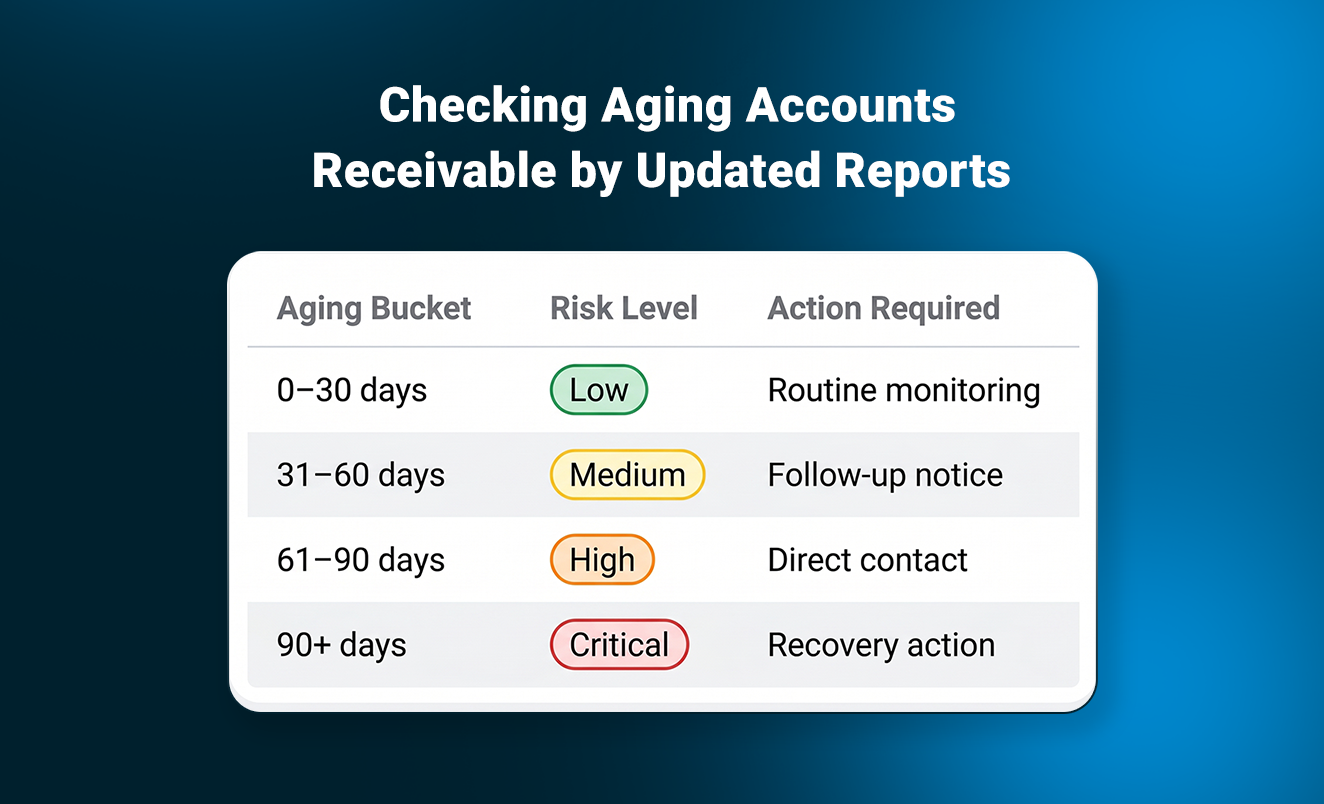
Accounts receivable aging reports give a clear view of outstanding invoices and help identify payment delays before they become serious. Reviewing these reports regularly is essential for maintaining financial control.
| Aging Bucket | Risk Level | Action Required |
| 0–30 days | Low | Routine monitoring |
| 31–60 days | Medium | Follow-up and reminders |
| 61–90 days | High | Escalation process |
| 90+ days | Critical | Consider recovery action |
Regular tracking helps businesses spot trends in late payments and take corrective action early. This level of transparency is a core part of professional bookkeeping in Dubai and supports audit-ready records.
Managing Days Sales Outstanding (DSO)
Days Sales Outstanding (DSO) is one of the most important indicators of AR performance. It measures the average number of days a business takes to collect payment after a sale.
For SMEs, DSO typically ranges between 30 and 55 days depending on the industry. High-performing businesses keep their DSO lower — often under 45 days — because faster collection means stronger cash flow. A DSO that consistently exceeds 60 days usually points to inefficiencies in the collection process.
A Simplified View of DSO Performance
| DSO Range | Performance Level |
| 30–45 days | Strong |
| 46–60 days | Average |
| 60+ days | High risk |
Reducing DSO improves liquidity and ensures a business has enough working capital to meet its operational needs. Monitoring and refining receivables procedures regularly is essential to financial health.
Debt Recovery and Escalation in the UAE
Not every invoice is settled through routine follow-ups. When debts remain unpaid beyond acceptable limits, businesses need a structured escalation process.
In the UAE, commercial debt recovery relies heavily on proper documentation and clear contractual terms. Companies should keep accurate records of invoices, communications, and agreements to support any escalation or legal proceedings if they become necessary.
Escalation should be gradual. Formal notices should follow the initial reminders, and only after that should external recovery options be considered. This approach maintains professionalism while protecting valuable business relationships.
Aligning Receivables with Cash Flow Planning
Cash flow and accounts receivable are closely linked. Late payments can disrupt operations, delay supplier payments, and weaken financial planning.
Businesses in Dubai should build receivables tracking into their cash flow forecasts. This means regularly comparing projected inflows against actual collections and updating forecasts accordingly. Seasonal factors, such as slower payment cycles during certain times of the year, should also be built into the plan.
By aligning receivables with financial planning, businesses can anticipate shortfalls and make better decisions to reduce the risk of liquidity problems.
Preparing for UAE E-Invoicing
Invoicing in the UAE is changing, and the shift has a direct impact on receivables. Under the Federal Tax Authority’s Electronic Invoicing System, businesses will issue and report invoices in a structured digital format through the Peppol network rather than as PDFs or paper documents. A voluntary pilot phase begins in July 2026, with mandatory adoption starting from January 2027 for the largest businesses and extending to other companies later in 2027.
For AR teams, this means cleaner data, faster invoice delivery, and stronger audit trails — but only if systems and processes are ready in advance. Preparing early helps businesses avoid penalties and keep their receivables process running smoothly through the transition.
Outsourced Bookkeeping and AR Support
Managing accounts receivable can be resource-intensive, particularly for growing SMEs. Outsourced bookkeeping offers a structured, professional way to manage receivables consistently and accurately.
With outsourced support, businesses gain systematic invoice tracking, regular follow-ups, detailed reporting, and stronger overall financial practices. ebs is a full-service accounting and bookkeeping firm in Dubai that helps organisations streamline their receivables management and maintain complete transparency.
Conclusion
Effective accounts receivable management is central to financial stability. By setting clear payment terms, following up systematically, tracking aging reports, and aligning receivables with cash flow, businesses can reduce overdue invoices significantly and protect their long-term financial health.
Reach out to us for a free consultation
Frequently Asked Questions
Everything you need to know — answered.
For most SMEs, an ideal DSO is between 30 and 45 days. This can vary by industry and by the payment terms agreed with clients.
Aging reports should be reviewed weekly so that overdue invoices are identified early and acted on quickly.
Yes. Many companies use outsourced bookkeeping services from EBS Chartered Accountants to handle invoicing, follow-ups, and reporting, which improves efficiency.
Delayed collections can create liquidity shortages, making it harder to meet operational expenses and financial obligations.